

The life of a student in the USA can feel exciting, new, and a little uncertain at first. You may wonder how classes work, what daily routines look like, how students make friends, and how much English you will use outside the classroom.
For international students, this experience is not only about studying. It is also about learning how to communicate, becoming more independent, understanding American culture, and building confidence step by step.
Some days may feel busy. Other days may feel fun and full of discovery. What matters most is knowing what to expect and how to prepare before you arrive.
This guide will help you understand the real student experience in the United States, especially if your goal is to study English and grow in a supportive learning environment.
What the life of a student in the USA usually looks like
The daily routine of a student in the USA depends on the school, program, city, and personal goals. Still, many students share similar experiences.
A typical day may include:
- Going to class
- Practicing English with classmates
- Studying or doing homework
- Eating meals with friends
- Joining school activities
- Exploring the city or even other states during the holidays
- Taking care of personal responsibilities
For English learners, the day often continues outside the classroom. Ordering food, asking for directions, shopping, using public transportation, and meeting new people all become part of the learning process.
This is one of the biggest benefits of studying in the United States: English becomes part of real life, not only a subject in a book.
Students who want to understand the broader experience of studying abroad can also learn more about what it means to study in the U.S. before choosing a program.
A day in the life of a student learning English
Every student has a different schedule, but many English learners follow a routine that combines study, practice, and personal time.
A morning may begin with breakfast, transportation, and class preparation. Students may review vocabulary, check homework, or talk with classmates before the lesson starts.
During class, students practice grammar, speaking, listening, reading, and writing. Good English programs also encourage interaction, so students can use the language in real situations.
After class, students may study in a library, visit a café, join an activity, or spend time with friends. These small daily moments help students become more comfortable with English.
A simple routine may look like this:
- Morning class or study session
- Lunch with classmates
- Afternoon homework or conversation practice
- School activity or city exploration
- Evening review, rest, or social time
The schedule may change from day to day. That flexibility can be exciting, but it also requires organization.
A helpful tip is to create a weekly plan. Include class time, study time, meals, rest, and activities. This makes student life feel more balanced.
Why the student experience is about more than classes
Classes are very important, but the student experience in the USA goes beyond academic learning.
Many students grow because they must solve daily problems in English. They learn how to ask questions, express opinions, make plans, and understand different accents.
This real-life practice helps students develop fluency in a more natural way. It also builds confidence.
For example, a student may learn new vocabulary in class in the morning. Later, that same student may use those words while ordering lunch, talking to a roommate, or asking for help at a store.
This connection between classroom learning and daily life makes the experience more practical and memorable.
Students who want to improve more quickly can explore how English and culture work together throughout the learning journey.
Building a vision in the life of a student abroad
Having a clear vision of a student can help you stay focused during your time in the United States.
This vision does not need to be complicated. It can be a simple idea of what you want to achieve.
You may want to:
- Speak English with more confidence
- Prepare for college or university
- Improve your career opportunities
- Meet people from different countries
- Experience American culture
- Become more independent
Your goals may change while you study, and that is normal. Many students discover new interests after arriving in the USA.
The important thing is to remember why you started. When classes feel challenging or homesickness appears, your personal vision can help you continue.
A clear goal gives meaning to your daily routine. It turns small actions, like reviewing vocabulary or joining a conversation, into steps toward something bigger.
How students make friends and build confidence
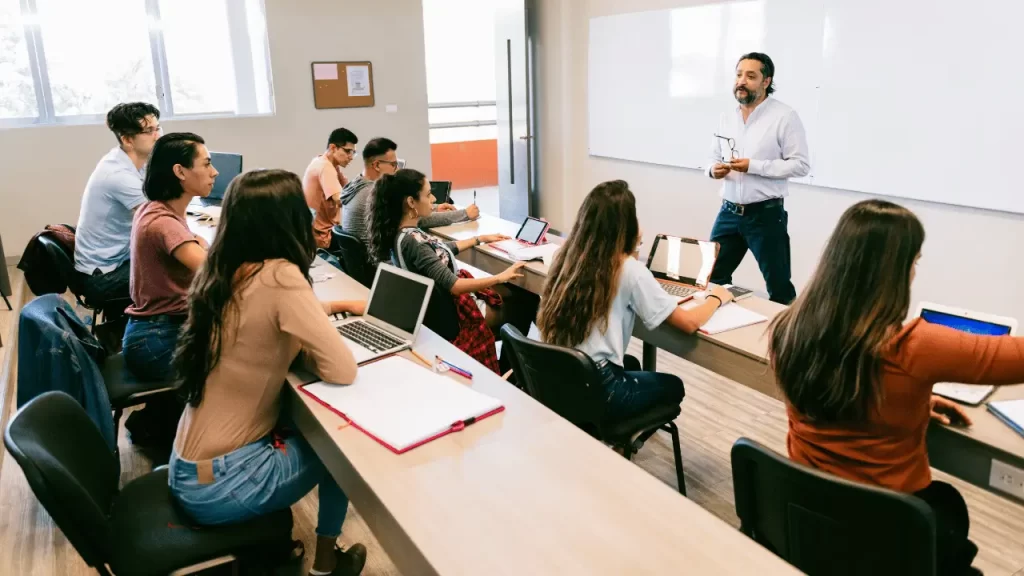
Making friends is one of the most important parts of student life. It can also be one of the biggest worries for international students.
At first, it may feel difficult to start conversations in English. You may worry about making mistakes or not understanding everything.
That feeling is very common.
The good news is that many other students feel the same way. English schools often bring together people from many countries, so everyone is learning and adapting.
Friendships can begin in simple ways:
- Saying hello before class
- Asking a classmate to study together
- Joining a school activity
- Eating lunch with other students
- Practicing conversation after class
You do not need perfect English to make friends. You need patience, curiosity, and a willingness to try.
Over time, these conversations become easier. Students often notice that their confidence grows because they use English for real communication, not only tests or homework.
Student life and American culture
Living and studying in the USA gives students many chances to experience American culture.
This may include holidays, local food, sports, music, museums, festivals, and community events. Even everyday habits can teach you something new.
You may notice how people greet each other, how classmates participate in discussions, or how students organize their schedules. These details help you understand the culture more deeply.
In California, students can also enjoy beaches, parks, cultural neighborhoods, restaurants, and local events. For many learners, this makes the experience more active and enjoyable.
Students interested in the local experience can learn more about studying English in California and how the location can support language learning.
Culture can become a classroom too. Every conversation, trip, and activity gives you another chance to listen, speak, and learn.
How to prepare for student life in the USA
Preparation can make your first weeks easier. You do not need to know everything before arriving, but a few steps can help you feel more confident.
Start with your documents. If you plan to study with an F-1 visa, make sure you understand the basic process and current requirements. Rules may vary, so students should check official information and ask their school for guidance.
Students who need more information can review how the F-1 student visa process works before making decisions.
You can also prepare your English before arrival. Practice common phrases for travel, housing, transportation, shopping, and school situations.
Useful phrases include:
- “Could you repeat that, please?”
- “I am an international student.”
- “Where is the nearest bus stop?”
- “Can you help me understand this form?”
- “I would like to practice my English.”
Pack with your daily life in mind. Bring clothes for the local weather, important documents, personal items, and anything that helps you feel comfortable.
Emotional preparation matters too. Moving to another country can bring excitement and nervousness at the same time. Both feelings are normal.
A few simple habits can also make your routine easier after you arrive. Review class notes daily, write down new words, speak English even when you feel unsure, keep important documents organized, and join school activities when possible.
Small routines help students feel more confident, prepared, and connected to daily life in the USA.
Common challenges students may face
The student journey can be positive and rewarding, but it can also include challenges.
Some students feel homesick. Others need time to understand the transportation system, classroom style, or local customs. Some may feel shy when speaking English with native speakers.
These challenges do not mean you are failing. They are part of adaptation.
Common challenges include:
- Understanding fast conversations
- Managing time
- Missing family and friends
- Adjusting to new food or routines
- Feeling nervous about speaking
- Learning how to ask for help
The best approach is to take one step at a time.
If you feel homesick, stay connected with family, but also build routines in your new city. If English feels difficult, practice a little every day. If you feel confused, ask your school team for support.
Students can also find helpful guidance about missing home while studying abroad.
Asking for help is a smart student habit. It helps you solve problems faster and feel less alone.
Your student story begins with daily choices
Studying in the USA is a personal journey. It includes classes, friendships, culture, challenges, and many small moments that help you grow.
You may arrive with one goal and discover new dreams along the way. You may feel nervous at first, then slowly become more confident in your English and your independence.
The life of a student is not the same for everyone, but it can be full of learning, connection, and progress when you have support, curiosity, and a clear purpose.