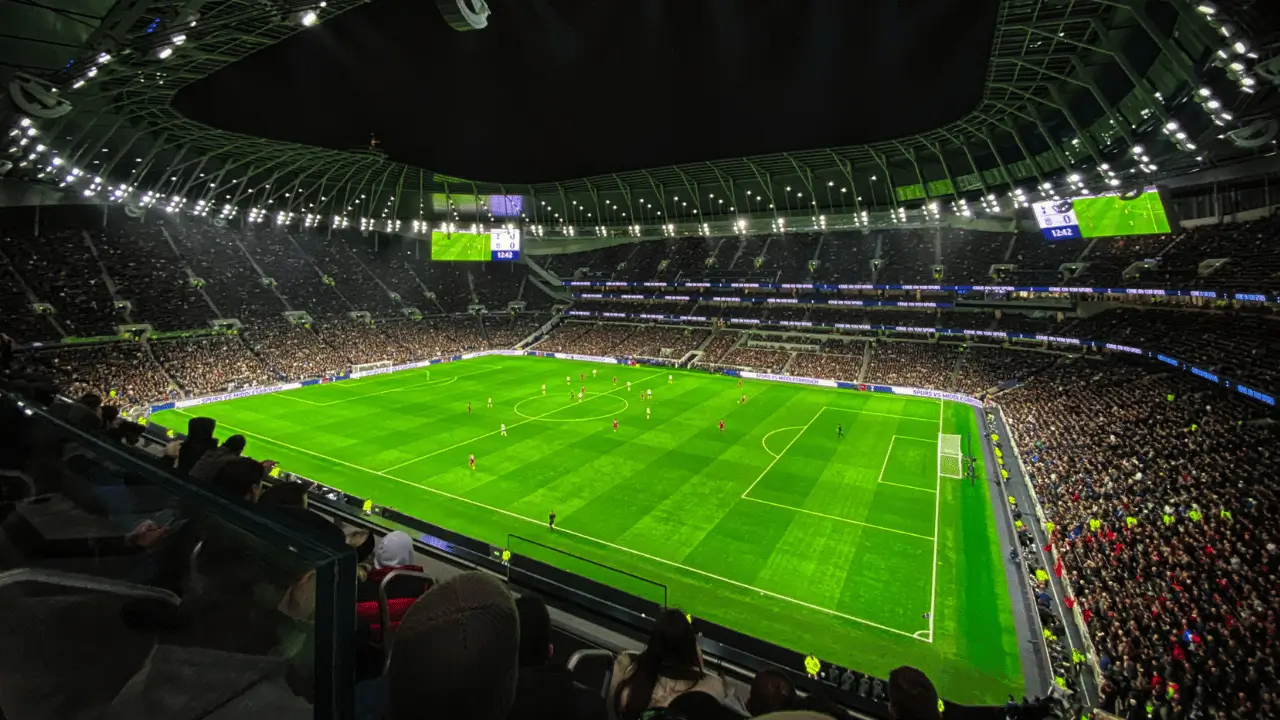
The FIFA World Cup 2026 is officially underway, and fans from every corner of the globe are celebrating the world’s most popular sport. Whether you’re cheering for Brazil, Argentina, Japan, Korea, Mexico, France, the United States, or another nation, the tournament is much more than a competition—it’s a global celebration of culture, diversity, and international connections.
For international students studying English in Los Angeles, the World Cup is also a great opportunity to improve their English, learn new vocabulary, and connect with people from different backgrounds. Just like a classroom, the World Cup brings together people from all over the world with a common goal.
The History of the FIFA World Cup
The FIFA World Cup was created by the Fédération Internationale de Football Association (FIFA) and first took place in 1930 in Uruguay.
Before the World Cup existed, international soccer competitions were mainly part of the Olympic Games. FIFA President Jules Rimet believed the sport deserved its own global tournament to bring together the best national teams in the world.
The first World Cup featured 13 teams, and the host nation, Uruguay, became the first champion by defeating Argentina in the final.
Over the decades, the tournament has grown into the largest sporting event on the planet, watched by billions of people and followed in nearly every country.
Every FIFA World Cup Host and Champion
- 1930 – Uruguay: The host nation won the very first World Cup.
- 1934 – Italy: Italy captured its first championship on home soil.
- 1938 – France: Italy became the first team to successfully defend its title.
- 1950 – Brazil: Uruguay defeated the host nation in the famous “Maracanazo.”
- 1954 – Switzerland: West Germany won its first World Cup title.
- 1958 – Sweden: Brazil won its first championship, introducing Pelé to the world.
- 1962 – Chile: Brazil successfully defended its title.
- 1966 – England: England won its first and only World Cup.
- 1970 – Mexico: Brazil became the first nation to win three World Cups.
- 1974 – West Germany: The host earned its second championship.
- 1978 – Argentina: Argentina won its first title while hosting the tournament.
- 1982 – Spain: Italy secured its third World Cup trophy.
- 1986 – Mexico: Led by Diego Maradona, Argentina won its second championship.
- 1990 – Italy: Germany claimed its third title.
- 1994 – USA: Brazil won its fourth World Cup after a dramatic penalty shootout.
- 1998 – France: France became champion on home soil.
- 2002 – Japan & South Korea: Brazil won a record fifth World Cup title.
- 2006 – Germany: Italy lifted the trophy for the fourth time.
- 2010 – South Africa; Spain won its first World Cup championship.
- 2014 – Brazil: Germany defeated Argentina in the final.
- 2018 – Russia: France captured its second World Cup title.
- 2022 – Qatar: Argentina won an unforgettable final against France and secured its third championship.
Countries with the Most World Cup Titles
- 🥇 Brazil – 5 titles
- 🥈 Germany – 4 titles
- 🥈 Italy – 4 titles
- 🥉 Argentina – 3 titles
- 🏅 France – 2 titles
- 🏅 Uruguay – 2 titles
- 🏅 England – 1 title
- 🏅 Spain – 1 title
Soccer or Football? Understanding the Difference
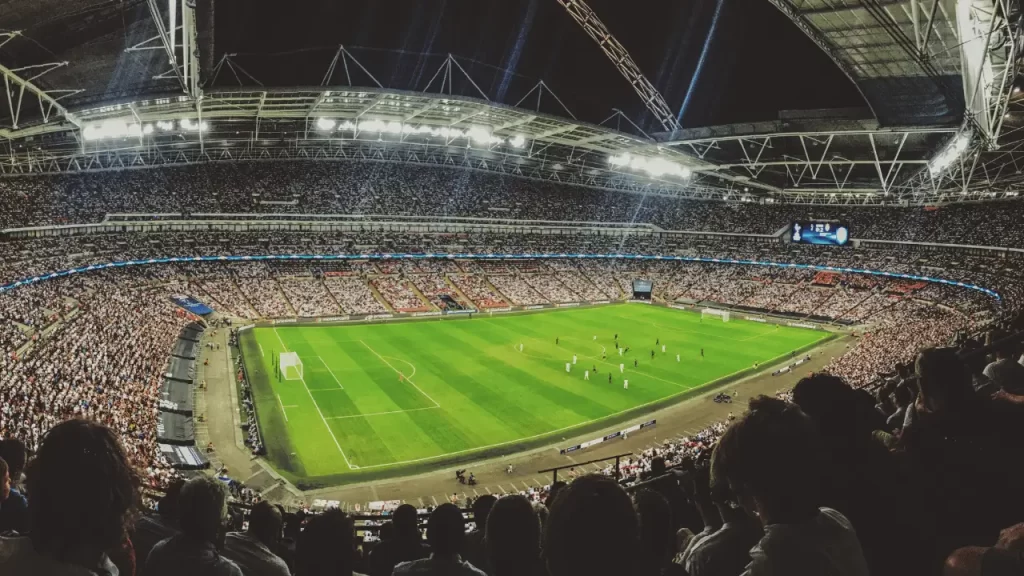
One question many English learners ask during the World Cup is:
“Should I say soccer or football?”
The answer is that both terms are correct.
In most countries around the world—including England, Brazil, Argentina, France, Germany, Spain, and many others—the sport is called football.
In the United States and Canada, however, the word football usually refers to American football, the sport played in the NFL. To avoid confusion, people use the term “soccer” when referring to the game played with a round ball.
Interestingly, the term “soccer” actually originated in England as a shortened version of “association football.” While it became less common in the United Kingdom over time, it remained widely used in North America.
If you’re studying English in Los Angeles, you’ll likely hear:
⚽ “Do you play soccer?”
But if you’re in London, you’ll probably hear:
⚽ “Do you play football?”
Both expressions are correct and refer to the same sport.
Soccer Vocabulary Every English Learner Should Know
If you’re watching the World Cup and learning English, these words will help you understand conversations, news reports, and match commentary.
- Goal: A point scored when the ball enters the net.
- Goalkeeper: The player responsible for protecting the goal.
- Penalty Kick: A direct shot awarded after certain fouls.
- Free Kick: A kick awarded after a rule violation.
- Corner Kick: A kick taken from the corner area after the defending team sends the ball out of play.
- Offside: A rule designed to prevent unfair attacking positions.
- Match: Another word for a soccer game.
- Extra Time: Additional playing time when a knockout match is tied.
- Hat Trick: When a player scores three goals in one game.
- Championship: The title awarded to the winning team.
- Referee: The official responsible for enforcing the rules.
- Knockout Stage: The elimination rounds of the tournament.
- Group Stage: The first phase of the competition.
- Trophy: The prize awarded to the champions.
- Fan: A person who supports a team or player.
What Does the World Cup Have in Common with an English School?
At first glance, soccer and learning English may seem unrelated. However, they share something very special: the power to bring people together.
The FIFA World Cup is one of the few events where people from nearly every country on Earth come together to celebrate, compete, and connect. Different languages, traditions, and cultures meet in one place, creating unforgettable experiences and lifelong memories.
The same thing happens every day inside an English school.
Students from Brazil, Japan, Korea, Thailand, Turkey, Saudi Arabia, Taiwan, France, Mexico, and many other countries come together with a common purpose: to improve their English and create new opportunities for their future.
Just like players work toward winning the World Cup trophy, students work toward achieving their language goals. Along the way, they build friendships, learn about different cultures, and become part of a truly international community.
This is one of the reasons why studying English in Los Angeles is such a unique experience. Los Angeles is one of the most diverse cities in the world, making it the perfect place for international students to practice English while connecting with people from every corner of the globe.
The World Cup reminds us that while we may come from different countries, speak different languages, and have different traditions, we can still come together through a shared passion.
In the classroom, that shared language is English.
Learn English in Los Angeles with Students from Around the World
If you’ve ever dreamed of studying English in California, there’s no better time to start. Just as the World Cup creates global connections through sports, an English school creates global connections through language.
Meet people from different countries, improve your communication skills, experience new cultures, and become part of an international community while learning English in Los Angeles.
Your English-learning journey may not end with a trophy—but it can open doors to opportunities all around the world.